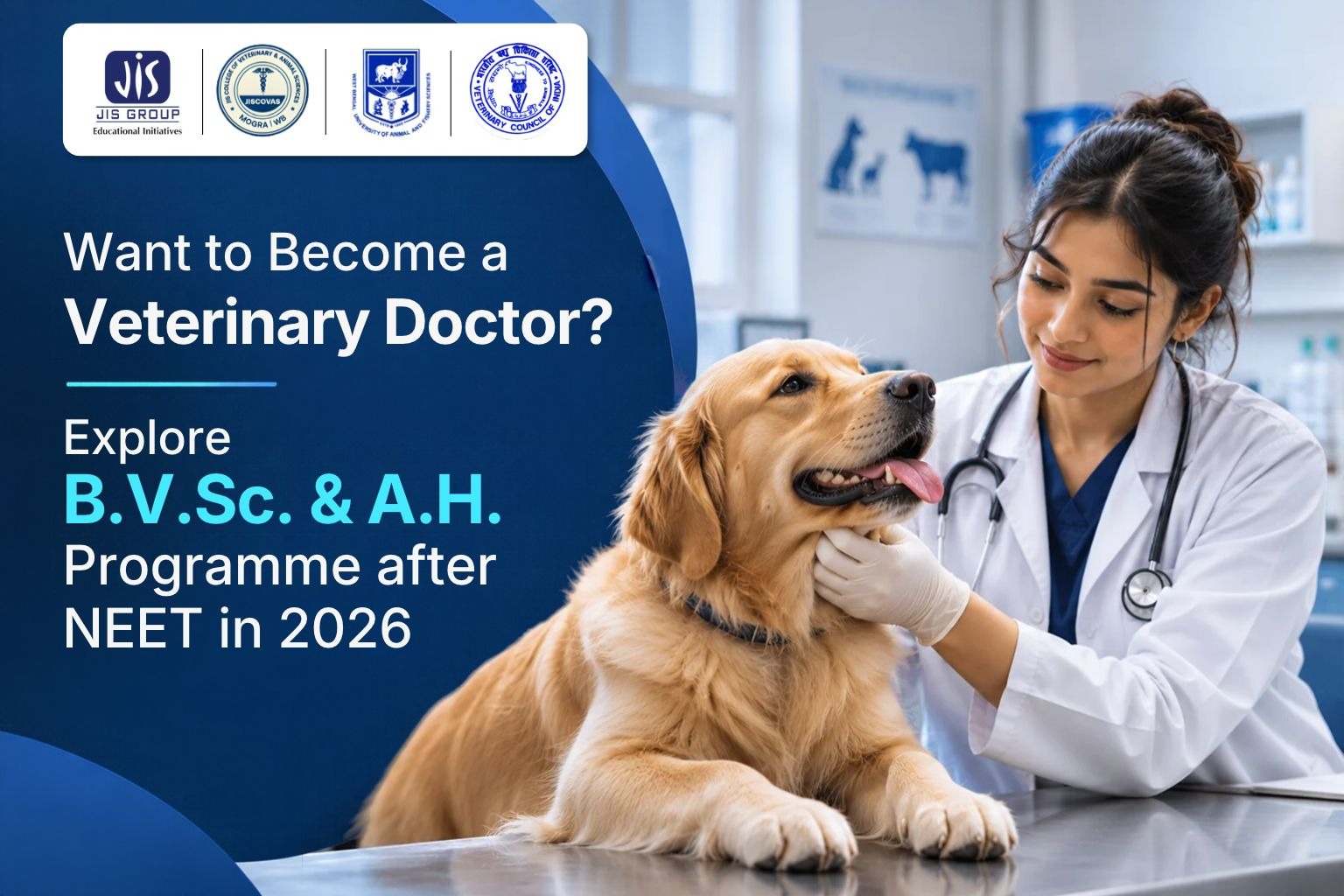
Have you ever wondered what it takes to become a veterinary doctor? If you have completed Class 12 with a science background and qualified NEET (UG), you may already be exploring different career opportunities in healthcare. While MBBS is a popular choice, veterinary science is another professional field that deserves your attention.
Animals need healthcare just as humans do. From treating pets and caring for livestock to preventing diseases and supporting animal welfare, veterinary professionals play an important role in society.
If you enjoy biology, have an interest in animals and want to build a career in healthcare, the Bachelor of Veterinary Science and Animal Husbandry (B.V.Sc. & A.H.) programme could be worth exploring.
For students considering BVSc admission in West Bengal, this guide explains the course, eligibility, duration, admission process and career opportunities, along with what to look for when choosing a veterinary college.
Students exploring a veterinary college in West Bengal can also compare private institutions offering the B.V.Sc. & A.H. programme. Before choosing an institution, it is important to understand its affiliation, recognition, academic facilities and practical training opportunities.
What Does It Take to Become a Veterinary Doctor?
Becoming a veterinary doctor requires more than simply having an interest in animals. It involves studying animal biology, understanding diseases, learning diagnostic methods and developing the practical skills needed to provide animal healthcare.
The B.V.Sc. & A.H. is a professional undergraduate degree designed to prepare students for this field.
During the programme, students learn about animal anatomy, physiology, nutrition, diseases, medicines, surgery and animal management. They also receive practical training to understand how veterinary knowledge is applied in real situations.
For example, a veterinary professional may examine a dog showing signs of illness, help a farmer manage a cattle health problem or advise on vaccination to prevent diseases in livestock.
The profession is not limited to treating domestic pets. Veterinary doctors also contribute to livestock healthcare, poultry management, disease prevention and animal welfare.
What Is B.V.Sc. & A.H.?
B.V.Sc. & A.H. stands for Bachelor of Veterinary Science and Animal Husbandry. The B.V.Sc. & A.H. programme is an undergraduate professional course focused on animal health, treatment, disease prevention and animal husbandry. It prepares students to understand different aspects of veterinary healthcare through scientific learning and practical training.
The course combines scientific learning with practical exposure. Students study how animal bodies function, how diseases develop and how different healthcare approaches are used to maintain animal health.
The B.V.Sc. & A.H. programme combines classroom education, laboratory learning and practical veterinary training to prepare students for professional roles in animal healthcare.
Some important areas covered during veterinary education include:
-
Animal Anatomy and Physiology: Understanding the structure and functioning of animal bodies.
-
Veterinary Pathology: Studying diseases and the changes they cause in animals.
-
Veterinary Pharmacology: Learning about medicines and their effects.
-
Animal Nutrition: Understanding the nutritional requirements of different animals.
-
Veterinary Medicine: Learning about the diagnosis, prevention and treatment of animal diseases.
-
Veterinary Surgery: Understanding surgical procedures and related clinical practices.
-
Animal Husbandry: Studying animal breeding, management, care and production.
The programme helps students build a scientific understanding of animal healthcare while developing the practical knowledge required for the profession.
Why Consider Veterinary Science After NEET?
NEET (UG) is an important entrance examination for students interested in medical and veterinary education. However, many students may not be fully aware that veterinary science is another professional course they can explore after qualifying NEET.
Here are some reasons to consider this career path.
1. A Career Focused on Animal Healthcare
If you are interested in biology and animal welfare, veterinary science offers an opportunity to work towards improving animal health and well-being.
2. Learning Beyond the Classroom
Veterinary education involves practical learning, laboratory work and clinical exposure. Students get opportunities to understand how scientific concepts are used in animal healthcare.
3. Different Areas of Professional Work
Veterinary graduates may explore opportunities in animal clinics, hospitals, dairy farms, poultry, livestock management, research and government veterinary services, depending on their qualifications and applicable requirements.
4. Opportunities for Specialisation
After completing the undergraduate programme, students can pursue postgraduate education and research in specialised areas of veterinary science.
However, it is important to understand that veterinary science is a demanding professional field. Students should be comfortable working with different animals, studying biological sciences and participating in practical training.
BVSc & AH Eligibility: Who Can Apply?
Before applying for BVSc admission in West Bengal, students should check the eligibility requirements carefully.
The general eligibility criteria include:
-
Candidates must have passed Class 12 or an equivalent examination from a recognised board.
-
Physics, Chemistry, Biology or Biotechnology, and English must be among the qualifying subjects.
-
Candidates must meet the prescribed minimum qualifying marks in the relevant subjects.
-
NEET (UG) qualification is required for admission.
-
Candidates must have completed 17 years of age on or before 31 December of the admission year.
Category-based age relaxation and minimum qualifying marks are subject to the applicable regulations.
The B.V.Sc. & A.H. programme follows the applicable guidelines of the Veterinary Council of India (VCI), and students should check its latest admission requirements before applying.
Students should check the latest Veterinary Council of India (VCI) guidelines and the official admission notification issued by the counselling authority for the exact eligibility conditions.
Remember, qualifying NEET does not automatically confirm a seat. Admission depends on eligibility, merit, counselling, seat availability and applicable reservation rules.
BVSc & AH Course Duration: How Long Will You Study?
The B.V.Sc. & A.H. programme requires a longer academic commitment than many conventional undergraduate degrees.
At JIS College of Veterinary and Animal Sciences, the programme structure is:
-
4½ years: Academic coursework
-
1 year: Compulsory internship
-
Total duration: 5½ years
During the academic period, students study different veterinary subjects and develop an understanding of animal healthcare.
The compulsory internship is an important part of professional training. It allows students to gain practical experience and understand how veterinary knowledge is applied in clinical and related professional settings.
For example, students may get exposure to animal health examinations, disease prevention, treatment procedures and livestock healthcare under appropriate professional supervision.
This practical component helps students understand the responsibilities involved in veterinary practice.
How Does BVSc Admission in West Bengal Work?
If you have qualified NEET (UG) and want to pursue veterinary science, understanding the admission process is your next step.
For students searching online for BVSc admission in West Bengal, it is important to understand the official counselling process and admission requirements. Students searching for BVSc & AH admission open information should check the latest WBUAFS and VCI notifications and confirm the current admission status directly with the college.
Admission to the B.V.Sc. & A.H. programme at JIS College of Veterinary and Animal Sciences (JISCOVAS) is conducted through the counselling process of the West Bengal University of Animal and Fishery Sciences (WBUAFS), Kolkata.
The admission process follows the applicable guidelines of the Veterinary Council of India and the counselling authority. Students interested in the B.V.Sc. & A.H. programme should carefully review the latest eligibility conditions, NEET requirements and counselling notifications before proceeding.
The general process involves the following steps:
Step 1: Qualify NEET (UG)
Candidates must appear for NEET (UG) and obtain the required qualifying result under the applicable admission regulations.
Step 2: Check the Official Counselling Notification
Visit the WBUAFS website to check the latest admission notification, eligibility conditions, counselling schedule and application instructions.
Step 3: Complete the Application Process
Eligible candidates must follow the prescribed registration and application procedure for counselling.
Step 4: Participate in Counselling
Seat allotment takes place according to the applicable merit, reservation rules, seat availability and counselling guidelines.
Step 5: Complete Admission Formalities
Candidates who are allotted seats must complete document verification and other admission requirements within the prescribed timeline.
Students should always follow official university notifications for accurate information about the admission process.
How to Choose the Right Veterinary College in West Bengal?
Selecting a college is an important decision because you will spend several years developing the knowledge and skills required for your profession.
Students searching for the 1st private veterinary college in West Bengal should look beyond promotional claims and carefully evaluate an institution's university affiliation, Veterinary Council of India recognition, academic infrastructure and clinical training facilities. These factors are important when comparing options for pursuing BVSc in private colleges.
The Veterinary Council of India recognition is one of the important factors students should consider when selecting an institution for the B.V.Sc. & A.H. programme. Verifying the college's recognition status helps students make a more informed decision about their veterinary education.
Consider checking the following factors:
-
Affiliation: Verify the university with which the institution is affiliated.
-
Recognition: Check its recognition status with the Veterinary Council of India.
-
Academic Facilities: Understand the facilities available for classroom teaching, laboratory work and practical learning.
-
Internship: Check the duration and structure of the compulsory internship.
-
Admission Process: Understand the NEET requirements and counselling procedure.
-
Fee Transparency: Request the latest official fee details and clarify any additional charges before confirming admission.
These checks will help you compare institutions and make a decision based on your academic and professional requirements.
Why Choose JISCOVAS for B.V.Sc. & A.H.?
Choosing a veterinary college is an important decision, especially when you are preparing to spend the next five and a half years building your professional knowledge and practical skills. While comparing different institutions, it is important to consider their university affiliation, regulatory recognition, academic structure and learning opportunities.
For students exploring a private veterinary college in West Bengal, JIS College of Veterinary and Animal Sciences (JISCOVAS), located in Mogra, Hooghly, is an institution worth considering.
Students looking for the 1st private veterinary college in West Bengal can explore JISCOVAS while comparing available institutions. Its affiliation with WBUAFS and recognition by VCI are important factors to consider when evaluating a private veterinary college for professional education in veterinary science.
Here are a few important reasons to explore the B.V.Sc. & A.H. programme at JISCOVAS:
1. Affiliation with WBUAFS
JISCOVAS is affiliated with the West Bengal University of Animal and Fishery Sciences (WBUAFS), Kolkata. This gives students an opportunity to pursue veterinary education under the university's prescribed academic framework.
2. Recognition by the Veterinary Council of India
The college is recognised by the Veterinary Council of India (VCI), an important consideration when selecting an institution for professional veterinary education.
The recognition of JISCOVAS by the Veterinary Council of India is an important consideration for students planning to pursue the B.V.Sc. & A.H. programme. It provides students with an opportunity to pursue veterinary education within the applicable regulatory framework.
3. A Structured 5½-Year Programme
The B.V.Sc. & A.H. programme includes 4½ years of academic coursework followed by a one-year compulsory internship. This structure combines academic learning with practical professional training.
4. Opportunity to Develop Veterinary Knowledge and Skills
The programme introduces students to different areas of veterinary science, including animal anatomy, physiology, pathology, pharmacology, animal nutrition and veterinary medicine. These subjects help build the foundation required for animal healthcare.
5. Location in Mogra, Hooghly
Located in Mogra, Hooghly, JISCOVAS provides an option for students looking to pursue veterinary education in West Bengal.
Ultimately, choosing a college should involve more than comparing advertisements or admission offers. Students should review the official academic details, understand the facilities available and clarify the admission requirements before making a decision.
If you are looking for a veterinary college in West Bengal, explore JISCOVAS and learn more about its B.V.Sc. & A.H. programme before taking your next step.
What Can You Do After Completing B.V.Sc. & A.H.?
A veterinary degree can lead to opportunities across different areas of animal healthcare and veterinary science.
After completing the programme and meeting applicable professional registration requirements, graduates may explore career paths such as:
Veterinary Doctor: Working in veterinary clinics, hospitals and animal healthcare services.
Government Veterinary Services: Exploring opportunities in government veterinary departments through relevant recruitment examinations.
Dairy and Livestock Sector: Contributing to animal health, disease prevention and livestock management.
Poultry Industry: Working in poultry healthcare, disease management and farm operations.
Research and Higher Education: Pursuing postgraduate studies and research in specialised veterinary subjects.
Animal Welfare: Exploring opportunities with animal welfare organisations and related initiatives.
For instance, a graduate interested in companion animals may choose to work in clinical veterinary practice, while someone interested in livestock healthcare may explore opportunities in the dairy sector.
Your career path will depend on your interests, further qualifications, practical experience and applicable professional requirements.
BVSc & AH Admission 2026: What Should You Know?
For students considering admission during the 2026–27 academic session, keeping track of the latest admission notifications is particularly important.
Students should regularly check updates from the Veterinary Council of India regarding the B.V.Sc. & A.H. programme, including applicable admission guidelines and regulatory requirements for the academic session.
The published admission extension notice for JISCOVAS indicates 30 November 2026 as the extended last date of admission under the Veterinary Council of India notification.
If you have qualified NEET (UG) and are interested in pursuing B.V.Sc. & A.H., do not wait until the final date to clarify your admission options.
Contact the college to understand current seat availability, eligibility requirements, counselling status and the applicable admission procedure.
Please verify the latest official notifications before proceeding, as an extended admission date does not necessarily mean that fresh applications or vacant seats are available.
Ready to Explore a Career in Veterinary Science?
Becoming a veterinary doctor is a journey that requires scientific knowledge, practical training and a genuine interest in animal healthcare.
If you have qualified NEET (UG) and want to explore a professional course beyond conventional medical options, B.V.Sc. & A.H. is worth considering.
Students looking for a veterinary college in West Bengal can explore the programme at JIS College of Veterinary and Animal Sciences (JISCOVAS), Mogra, Hooghly.
Whether you are exploring BVSc in private colleges or comparing options for veterinary education in West Bengal, make sure you understand the eligibility criteria, admission procedure, course structure and practical training opportunities before making your decision.
Understand the course, check your eligibility and verify the admission requirements before taking your next step.
Interested in Veterinary Science?
Explore the B.V.Sc. & A.H. programme and learn more about veterinary education at JISCOVAS.
Frequently Asked Questions (FAQs)
1. What is the eligibility for B.V.Sc. & A.H.?
Candidates must have passed Class 12 with Physics, Chemistry, Biology or Biotechnology, and English. They must also satisfy the prescribed minimum marks, age criteria and NEET (UG) qualification requirements under the applicable admission regulations.
2. What is the BVSc and AH course duration?
The B.V.Sc. & A.H. programme has a total duration of 5½ years, including 4½ years of academic coursework and one year of compulsory internship.
3. What are the BVSc & AH fees?
The fees vary depending on the institution and applicable seat category. Students should contact their preferred college or check its official admission notice for the latest fee structure and additional charges.
4. Is NEET compulsory for BVSc admission in West Bengal?
Yes. NEET (UG) qualification is required for admission to B.V.Sc. & A.H., subject to the applicable admission regulations and counselling procedure.
5. Can I study BVSc at a private veterinary college in West Bengal?
Yes. Students can explore private veterinary colleges in West Bengal, provided they meet the applicable eligibility requirements and the institution has the required affiliation and regulatory recognition. JISCOVAS in Mogra, Hooghly, is affiliated with WBUAFS and recognised by VCI.
6. How can I get admission to JISCOVAS?
Admission to the B.V.Sc. & A.H. programme at JISCOVAS is conducted through WBUAFS counselling. Candidates must qualify NEET (UG), meet the prescribed eligibility requirements and follow the official counselling instructions.
7. What subjects are taught in veterinary science?
Students study subjects such as animal anatomy, physiology, biochemistry, pathology, pharmacology, animal nutrition, veterinary medicine, surgery and animal husbandry.
8. What are the career options after B.V.Sc. & A.H.?
Graduates may explore veterinary practice, animal hospitals, livestock management, dairy and poultry sectors, government veterinary services, research and higher education, subject to the relevant qualifications and professional requirements.
9. What is the last date for BVSc admission in 2026?
The published VCI admission extension notice for the 2026–27 session indicates 30 November 2026 as the extended last date of admission. Students should contact the college to confirm current seat availability and applicable admission options.
10. Is JISCOVAS affiliated with WBUAFS and recognised by the Veterinary Council of India?
Yes. JIS College of Veterinary and Animal Sciences (JISCOVAS) is affiliated with the West Bengal University of Animal and Fishery Sciences (WBUAFS), Kolkata, and recognised by the Veterinary Council of India (VCI). Students interested in the B.V.Sc. & A.H. programme can explore the college for further information about veterinary education.